


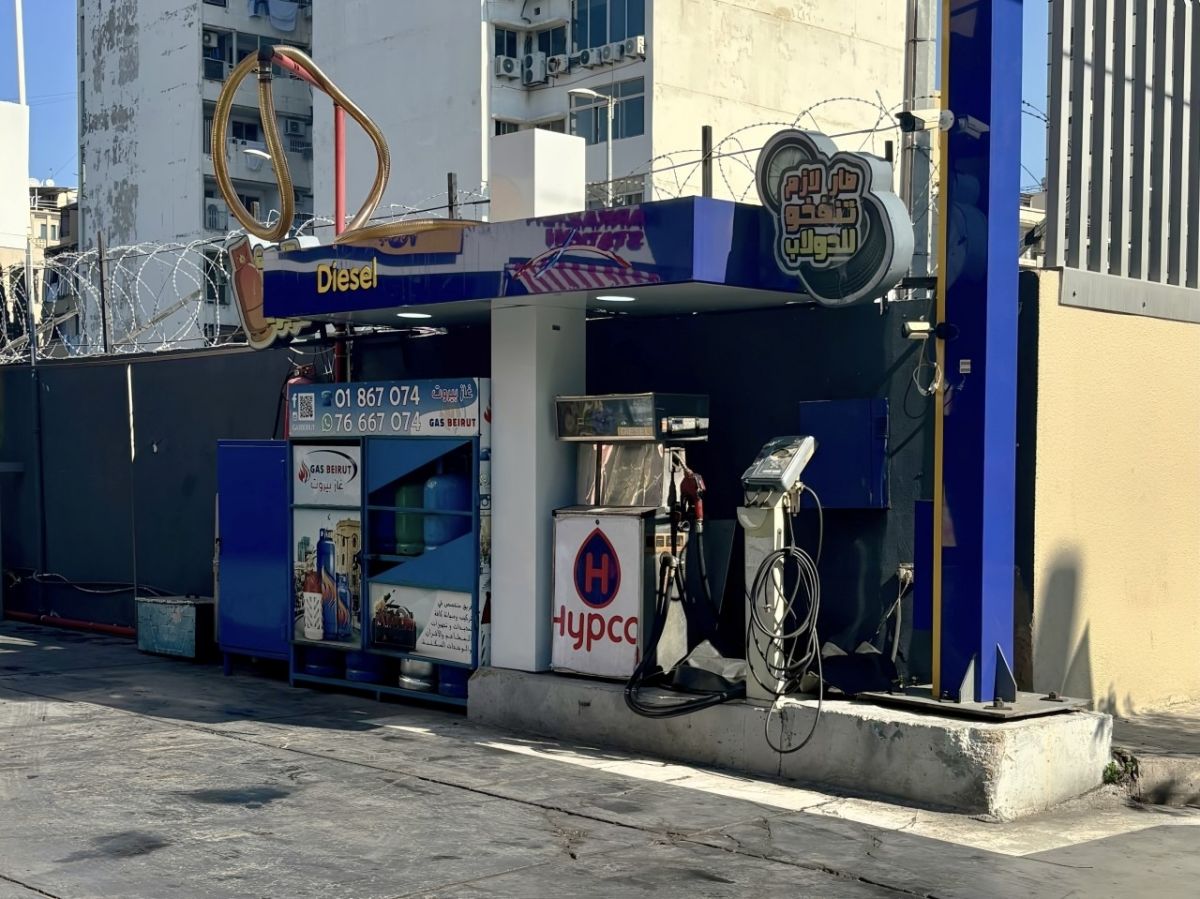
A diesel pump at a gas station in Hamra on Jan. 30, 2025. (Illustrative photo by Philippe Hage Boutros/L'Orient Today)






The consumer price index (CPI) in Lebanese pounds jumped 20.02% year over year, after a 3.04% increase recorded in April, against the backdrop of Israel's war on Lebanon.
According to updated figures from the Central Administration of Statistics (CAS), this is the sharpest annual increase in the CPI since September 2024 (+32.92%). The average increase in the CPI over the first four months of 2026 is 15.12%, according to our calculations.
It should be noted that at the same time in 2023, prices were in the process of finishing their adjustment to the prevailing exchange rate after a long period of volatility that began with the crisis at the end of 2019, which explains the significant annual change in the CPI in September 2024.

As the exchange rate remained stable in April at LL 89,500, inflation is being driven by other factors, including changes in oil prices, which were, however, less pronounced than a month earlier.
Although WTI and Brent barrels moved erratically in line with statements related to the U.S.-Israeli war against Tehran on Feb. 28, recording several peaks well above those levels, they were showing roughly the same values between the end of March and the end of April, at nearly $99 for the former and $105 for the latter.
On the Lebanese market, where these prices are passed on with a slight delay, gasoline rose 0.4% in April, while diesel fell 1%. These changes contrast with those of March. The correction in the price of diesel, which had increased excessively in March, continued more sharply according to the various price schedules published by the Energy Ministry. Gas fell 11.5% in April, against a backdrop of lower overall demand with the arrival of warmer weather.
According to CAS figures, the subindex measuring household energy prices — which includes fuel oil, fuel, electricity, and water — rose 14.06%, the sharpest monthly increase in April (+41.39% year over year), ahead of clothing (+8.68% month over month, nearly double the 4.90% year over year).
Overall housing costs (including energy) came in third, with an increase of 5.87% in one month and 26.30% in one year. Restaurant and hotel prices followed (+5.33% in one month and +15.98% in one year).
Despite one piece of good news, the only monthly decline was recorded in the subindex for foodstuffs and nonalcoholic beverages, at -0.47%, which does not, however, offset the +17.87% recorded over one year.
Hani Bohsali, head of the food importers’ syndicate, highlighted the slight monthly decline, saying the rise in prices recorded in Lebanon “resulted from the global economic crisis and international tensions” and had “affected the purchasing power of a large segment of the population.” He nevertheless said there were no shortages to fear on the market ahead of Eid al-Adha, noting that importers had, since 2019, grown accustomed to diversifying their sources of supply and favoring suppliers offering more competitive prices.
Inflation increased month over month in all the country's governorates, with rises of 2.02% in Beirut, 2.71% in Mount Lebanon, 2.54% in the North, 5.74% in the Bekaa, 3.72% in the South, and 3.97% in Nabatieh.

 7 p.m. recap: Netanyahu seeks mastermind behind Flydubai incident; Washington sanctions 2 French nationals; Ben Gvir's 'I want to kill you' threat