






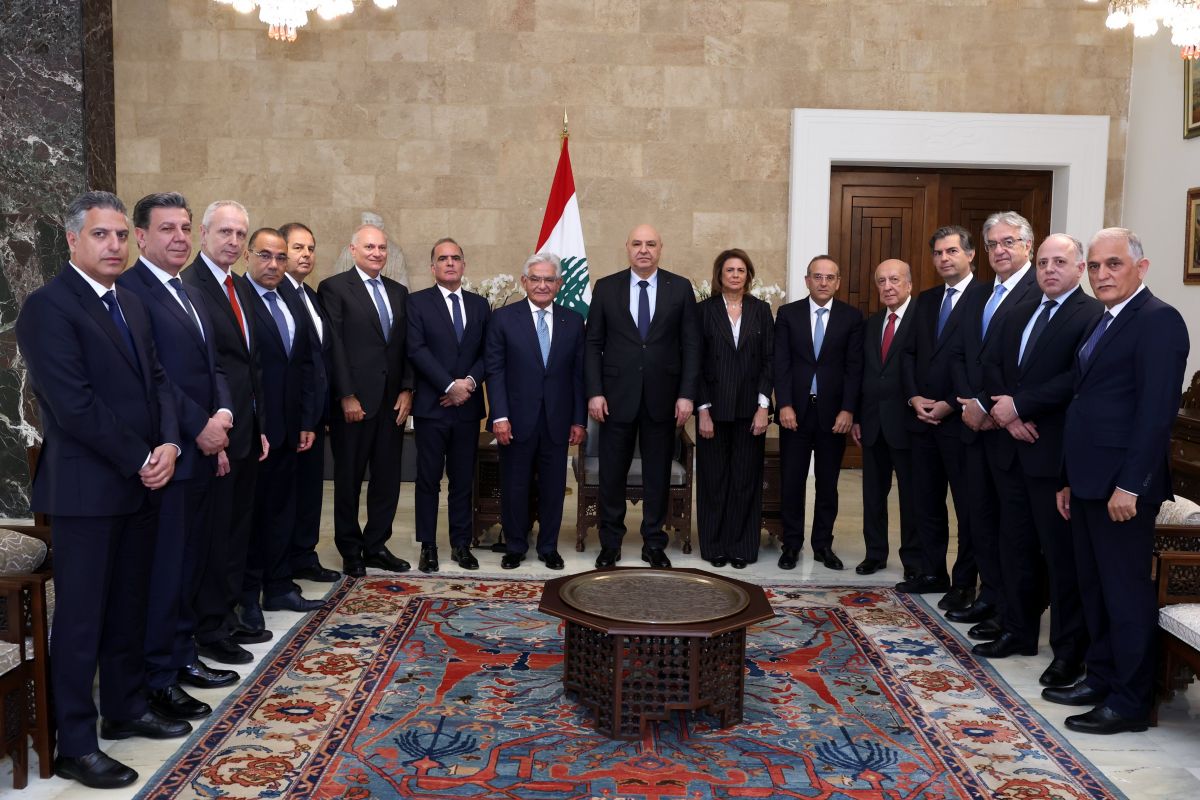
Chairman of the Association of Banks in Lebanon Salim Sfeir and a delegation visiting Lebanese President Joseph Aoun at the Baabda Presidential Palace. (Credit: @LBpresidency/X)






A delegation from the Association of Banks in Lebanon (ABL) visited the Baabda Presidential Palace on Thursday to urge President Joseph Aoun on “the need for cooperation between the Association, the relevant ministries, and the Banque du Liban to address the banking crisis and reorganize the financial and banking system," the Lebanese Presidency said in a post on X.
“We were pleased with the President of the Republic’s confirmation that addressing the banking crisis is a shared national responsibility that no single party can handle alone, which requires full partnership between the state, the banking sector, and all relevant stakeholders,” said Salim Sfeir, the president of the ABL, during a press briefing following the meeting.
The visit comes after the government approved, on April 30, a draft law amending the bank resolution law passed by Parliament last summer. The amendments are in line with the expectations of the International Monetary Fund (IMF), with which Lebanon is seeking a support program tied to the implementation of reforms. During the Cabinet session discussing the amendments, the governor of the Banque du Liban raised several reservations about the changes.
Since the early months of the crisis that began in 2019, the Association of Banks in Lebanon has been in deep disagreement with the IMF over how financial losses should be distributed and how deposit repayments should be handled.
The IMF considers it essential that any resolution process follow international standards regarding the hierarchy of liabilities and rejects any measures that would protect bank capital at the expense of depositors’ rights. The banks, meanwhile, have maintained since 2019 that the crisis is systemic and argue that the state, and therefore taxpayers, should bear the primary burden of the losses, among other points of disagreement.
The ABL’s position does not reflect that of all banks operating in Lebanon.
Salim Sfeir also reiterated the Association’s “full support” for President Joseph Aoun during this “delicate phase,” as well as its backing of the decisions taken by the president and the government to “restore sovereignty,” “strengthen state authority,” and ensure “respect for and enforcement of laws.”
Lebanon, which has been undergoing a severe financial crisis since 2019, is also facing the consequences of the war between Hezbollah and Israel, which resumed on March 2 after a so-called cease-fire lasting over a year. Lebanon and Israel also held their first round of direct talks in Washington on Thursday.
