



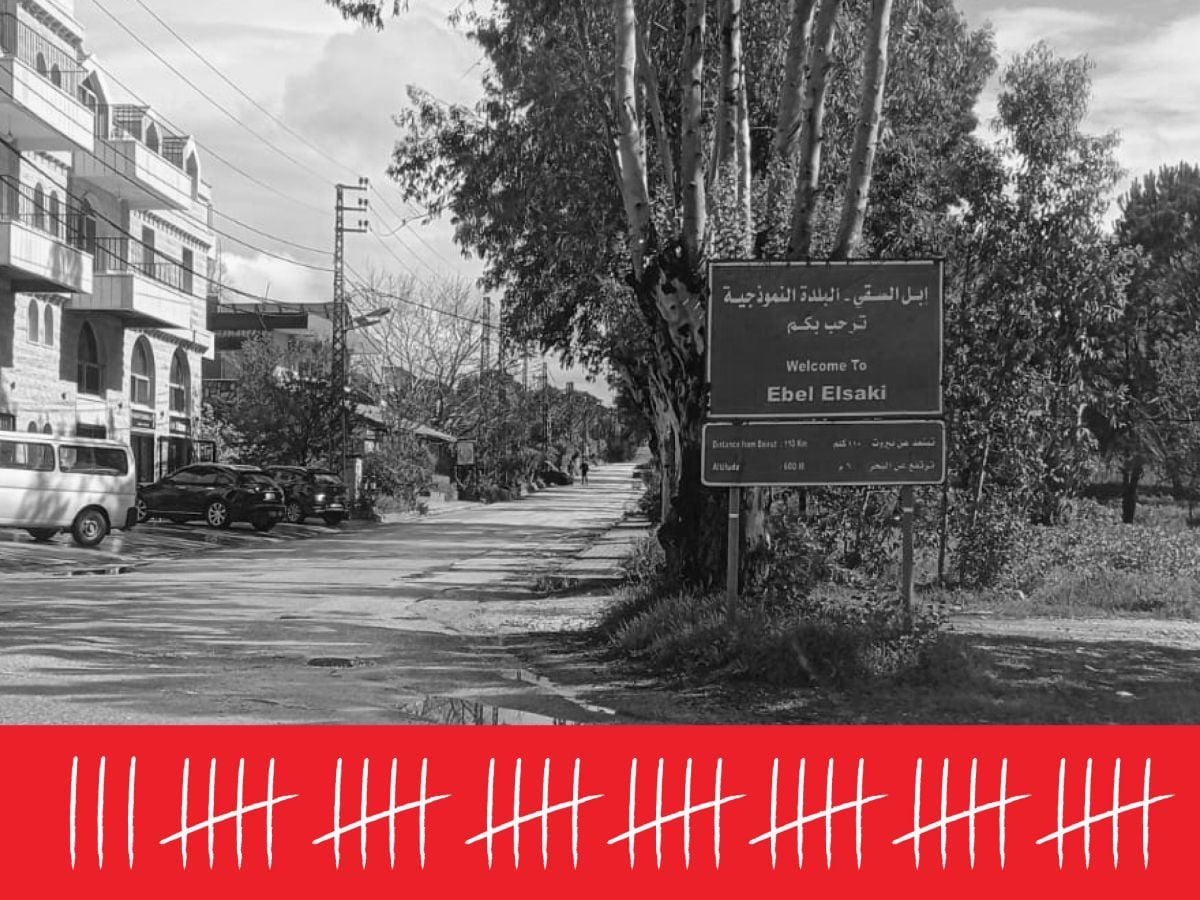
(Credit: Rabih Said)






Since the start of the latest war with Israel, Rabih’s home in Ibl al-Saqi (Marjayoun district) has had electricity around the clock, a sharp contrast to the four to six hours a day residents received before.
He does not know why. Mass displacement caused by Israeli attacks and threats on the area has likely reduced demand.
Some residents believe the state is trying to signal it has not abandoned the South. Others repeat a rumor that Israel wants continuous power to ensure “permanent lighting.”
Since early March, however, electricity has been largely uninterrupted in the village.
“Every cloud has a silver lining,” Rabih says, with irony.
Ibl al-Saqi lies at the southeastern tip of Lebanon, just a few kilometers from the Israeli border. The town is one of the few without a Shiite majority in Jabal Amel. In normal times, about 450 Lebanese families — Christians and Druze — live there.
On clear days, the horizon stretches to the Golan Heights, most of which Israel annexed in 1981. Israeli radio stations mix with local broadcasts. Here, the enemy is not abstract, but a visible neighbor.
Tarek, in his 50s, recalls the 1982 invasion. “It started the same way — heavy bombing, planes, anti-aircraft fire,” he says. After several days of fighting, he came face-to-face with Israeli soldiers handing out candy to children at a gas station at the edge of the village.
“We stared at the tanks, amazed at the military equipment,” he recalls.
More than four decades later, he fears history may be repeating itself. Israeli forces are advancing deeper into Lebanese territory, though they have not established full control.
“The occupation is here. I feel it. It’s hard to explain, but everything feels like yesterday,” Tarek says by phone.
Since the start of the war, much of the village has emptied out again. Hundreds of families have left, and only about 60 residents remain, including Rabih and Tarek.
A few shops have reopened, and occasional humanitarian aid provides basic supplies like rice, sardines, and bread. But the streets remain tense. Lebanese Army vehicles are stationed along the main road, with soldiers keeping watch.
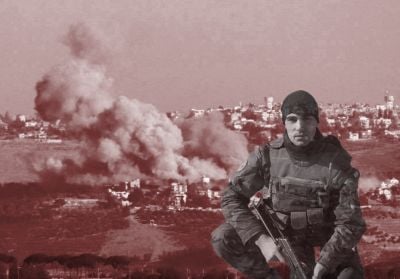
Their presence is largely symbolic, residents say, but significant. In other border areas, the army’s withdrawal has signaled the collapse of local communities.
Few here, however, expect protection from the army. Residents say they are relying on themselves to safeguard the town, in which Israeli attacks killed two people during the 2024 war.
Tarek, who works with the municipal police, is among those mobilized to maintain security. Residents have set up checkpoints at the village entrances and are restricting access, particularly to displaced Shiite families, in what they say is an effort to distance the town from Hezbollah.
In early March, a resident raised a Druze flag, seen by some as a survival instinct, and by others as a sectarian provocation.
“You can be accused of being a traitor for less than that,” Tarek says.
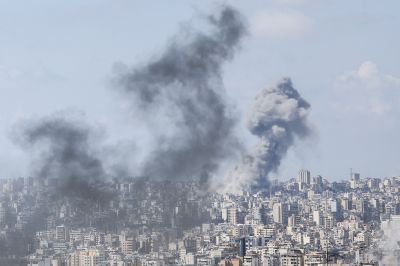
By late afternoon, the sound of explosions echoes again across the area — dozens since the start of the day. Rabih stopped counting.
Then the electricity cuts out across the village.
“Looks like they hit the power station,” he says.
He shrugs it off. After a night in the dark and some repairs, power will likely be restored by morning, as it often is.
Name has been changed.
