







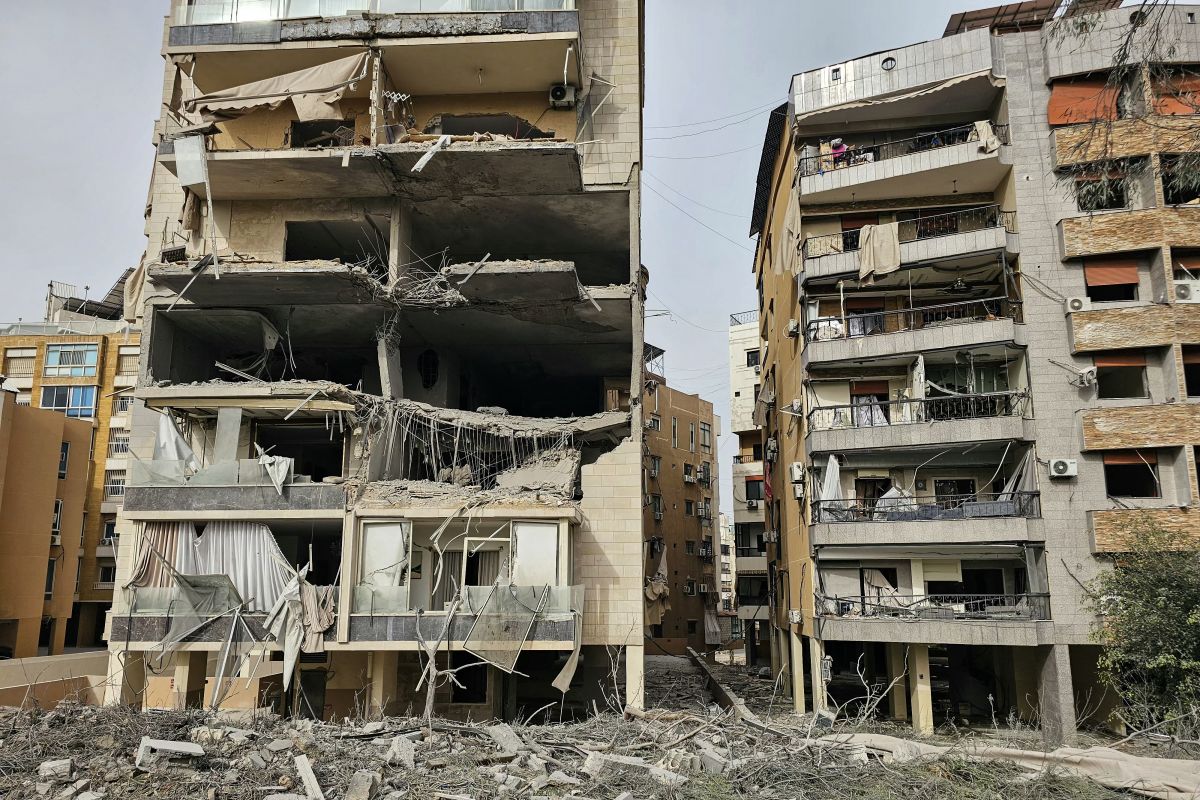
A photographs shows damaged buildings following an overnight Israeli airstrike in the Al Hadath neighborhood of Beirut's southern suburbs, on April 1, 2026. (Credit: AFP)






BEIRUT — The Israeli army said it struck "two currency exchange offices in Beirut overnight that were used to finance Hezbollah," which it has designated as a terrorist organization. Its Arabic-language spokesperson also issued a warning to "currency exchange offices serving Hezbollah," adding that "The Israeli military warns you; continuing these activities puts you at direct risk."
According to the Israeli military, the two targeted locations are Trade Point International S.A.R.L, owned by Mohammad Noureddine, and Boa Chance, owned by Hussein Ibrahim. The headquarters of Trade Point International S.A.R.L is located, according to the U.S. sanctions list, on the highway leading to the airport at Bir Hassan, where a building was bombed Tuesday afternoon.
Noureddine had been under U.S. Treasury sanctions since 2016, accused of laundering money for Hezbollah. The Israeli army also accuses him of using his currency exchange businesses, including one registered in Lebanon, to transfer funds to Hezbollah from several countries. In 2018, Mr. Noureddine was convicted in France for being a “key member of a criminal network that laundered Colombian drug money through luxury jewelry trading.” His current place of residence has not been specified.
Hussein Ibrahim is described as a “businessman and exchange agent” who heads a company operating outside Lebanon, allegedly working “through shell companies and international commercial circuits to launder and transfer funds” to Hezbollah. He is not under U.S. sanctions, according to a search on the Office of Foreign Assets Control (OFAC) sanctions list.
The Israeli military claims that "Hezbollah's systematic use of currency exchange offices was revealed about a year ago and constitutes a central channel for financing and money laundering from Iran." "These establishments knowingly transfer funds to the group and directly participate in financing its activities and strengthening its economic capacities," the military alleges.
It also specifies that the strikes were carried out after "identifying the continuation of fund transfers to Hezbollah, used for activities targeting its forces and Israeli civilians."
Two weeks ago, a currency exchanger from the Bekaa Valley with offices in Beirut reportedly received threatening phone calls, likely from the Israeli army, urging him to evacuate his place of residence. However, no strikes were reported after these threats.

 8 p.m. recap: Israel again threatens Beirut’s south suburbs; 2 ships hit near Hormuz; Riyadh football matches canceled