







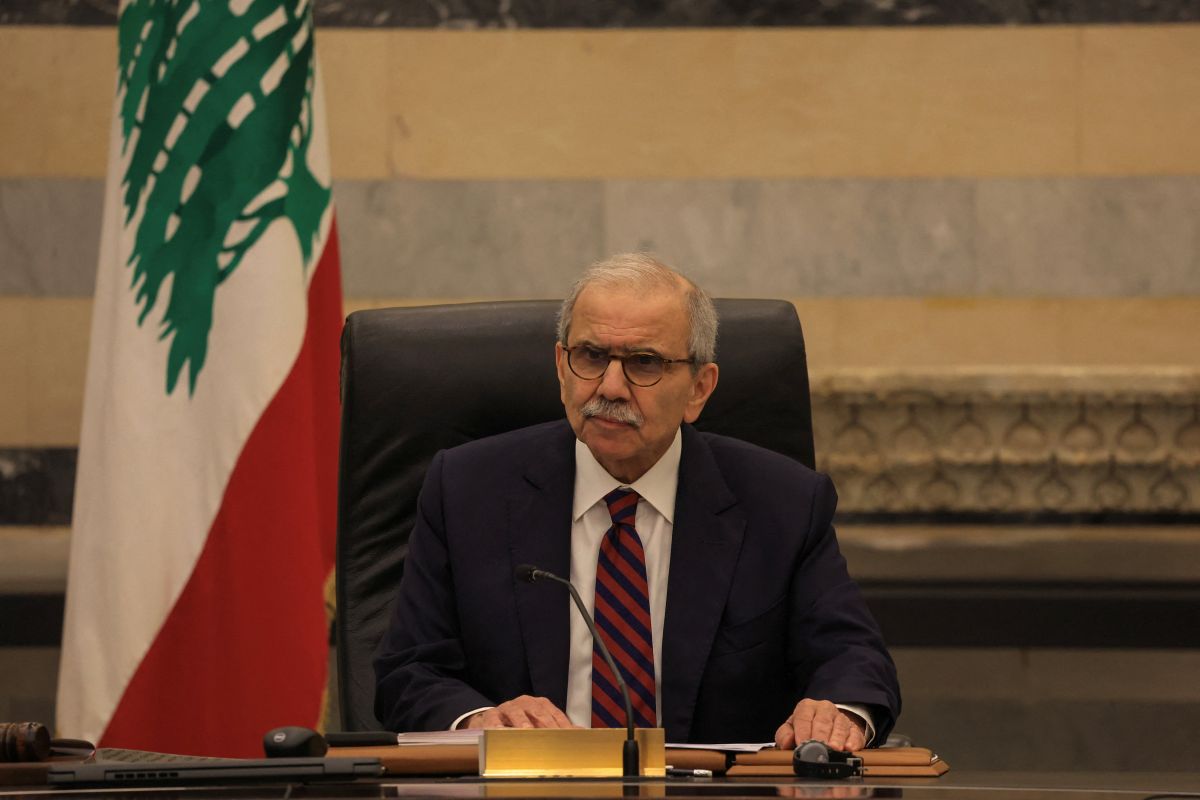
Prime Minister Nawaf Salam leads a Cabinet meeting, amid escalating hostilities between Israel and Hezbollah, as the U.S.-Israeli conflict with Iran continues, in Beirut, Lebanon, March 26, 2026. (Credit: Mohamed Azakir/Reuters)






BEIRUT — Prime Minister Nawaf Salam contacted U.N. Secretary-General Antonio Guterres on Thursday to denounce the ongoing "Israeli aggressions" in southern Lebanon, while highlighting the "risk of annexation" of part of the region as the Israeli ground offensive expands.
The head of government thus warned against "repeated threats by Israeli officials to occupy and potentially annex the area south of the Litani," also accusing Israel of having destroyed most of the bridges over the river in order to isolate the region from the rest of the country, according to a statement published by the National News Agency (NNA).
On Tuesday, Israeli Defense Minister Israel Katz announced that the army would seize an area in southern Lebanon stretching from the border to the Litani River, some thirty kilometers farther north, to ensure its security. "Israeli forces are maneuvering inside Lebanese territory to seize an advanced defensive line," Katz said in a video released by his office.
Salam also mentioned the fate of more than one million Lebanese forcibly displaced, the daily destruction of land and homes, and said that "these actions prevent the return of civilians in the short term." He also indicated that Beirut had filed an immediate complaint with the U.N. Security Council to denounce these violations of international law, calling on the body to act to end them.
At the end of Thursday's Cabinet meeting, Information Minister Paul Morcos announced that Lebanon would refer the Israeli actions to the UN Security Council as they "threaten the country's sovereignty."
The decision was motivated by the bombardment of most of the Litani bridges — the river that separates part of the south from the rest of the country — the "massive forced displacement of residents," and "the advance of Israeli troops on Lebanese territory, accompanied by destruction ... which threatens Lebanon's sovereignty and the integrity of its territory," he detailed.
At a time when Washington seems to be seeking a diplomatic exit to the war against Iran, Israel is determined to intensify its military operations in Lebanon against Hezbollah, a Tehran ally.
According to a new tally Thursday from the Health Ministry, Israeli strikes have killed 1,116 people since hostilities began on March 2, including 121 children, injured more than 3,000, and displaced more than a million people.
