





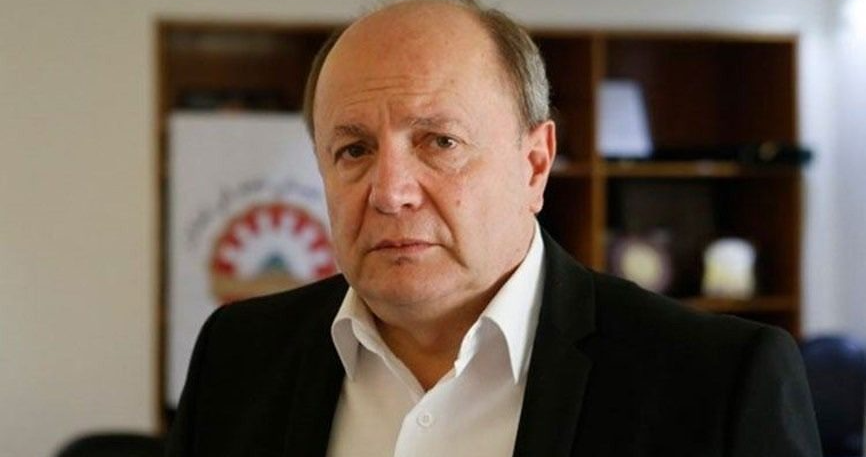
The president of the General Confederation of Lebanese Workers (CGTL), Beshara Asmar. (Credit: NNA)






BEIRUT — GTL President Beshara Asmar says talks with Nawaf Salam’s government are underway to find alternatives to unpopular public sector measures.
These measures include imposing an excise tax equivalent to $3.5, raising the VAT by one point, and adding taxes on containers entering the port.
"Negotiations have begun and will continue in the coming days. No strike order has been given for now," said Asmar, just a few hours after a meeting at the Grand Serail with Nawaf Salam, from which he appeared to have come out confident, noting that the head of government had "shown a certain openness."
The CGTL, represents private-sector workers, does not deny the need to increase salaries and pensions for public sector employees but rejects the government’s methods for financing them, arguing that they unfairly increase the burden on citizens.
"The discussions focused on alternative ways to finance these increases. CGTL presented its proposals, including a tax on tobacco, as well as other measures related to fighting tax and customs evasion," Asmar further explained to L’Orient-Le Jour.
It should be noted that the government had already tasked several ministers with assessing revenue linked to the regularization of illegal careers and seafront properties, in order to generate additional resources to support decisions made on Monday.
Meanwhile, reactions to these measures are mounting. The president of the Association of Fuel Importers (APIC), Maroun Chammas, stated that "any increase, whether significant or modest, has a direct impact on the market," and that the fundamental issue posed by rising gasoline prices "lies in the lack of serious alternatives to private cars in Lebanon, as public transport still is neither truly operational nor organized."
In an interview with LebEconomy.com, he added that the country "is currently going through an exceptional situation, due to global pressures keeping the price of a barrel relatively low," but nothing guarantees this situation will last, in a context marked by uncertainty over the possibility of an imminent conflict between Tehran and Washington, or the ongoing conflict between Russia and Ukraine.

 Evening recap: Netanyahu announces West Bank offensive; 7 killed in Jordan church shooting; tents burned in south Lebanon
 US strike on Iran this weekend? ‘Absolutely,’ says Barrack; ‘I have no idea,’ says Trump