






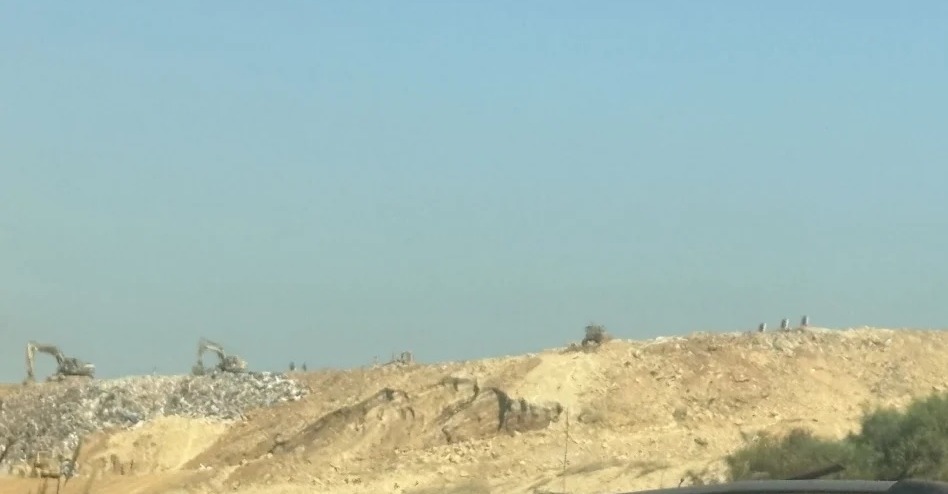
Jdeideh landfill keeps rising higher, now saturated for months. (Credit: Suzanne Baaklini /L'Orient-Le Jour)






After being closed for 24 hours by a decision of the Council for Development and Reconstruction (CDR), the Jdeideh landfill (located on the coast of Metn), which serves North Mount Lebanon (mainly Metn and Kesrouan), reopened on Thursday.
Walid Bou Saad, CEO of Ramco, the company responsible for garbage collection in the two districts, confirmed that collection resumed in Metn and Kesrouan after a 24-hour closure. "We were notified last night [Wednesday] that the landfill would reopen this morning," Mr. Bou Saad told L’Orient-Le Jour (L'OLJ).
The reopening of the landfill followed a meeting held Wednesday evening between Finance Minister Yassine Jaber and CDR President Mohammad Ali Kabbani, during which "an agreement was reached to resolve the issue," according to information from L’OLJ.
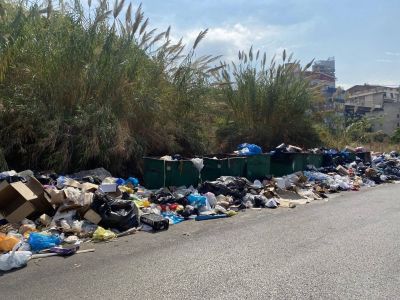
The closure of the landfill and the disruption in garbage collection originated from the site's saturation for several months, even though its expansion was decided by the government last October. The CDR, which manages official landfills, had suggested that the government release a sum of $5.12 million to finance a new plot of adjacent land, as well as a system to produce energy by recovering methane gas emitted by the waste, a measure requiring adoption of a law in Parliament.
Due to the delay in passing this law, the CDR proposed to the Ministry of Finance, as early as December, to take this sum from the Autonomous Municipal Fund, more specifically from the share of the municipalities served by the landfill, on the condition that it would be reimbursed later when the budget is released. But the delay in placing this issue on the agenda of the Cabinet led to the closure of the landfill, given "the absence of an official decision that prevents the signing of the contract with the contractor responsible for the expansion [and management of the current site], the company SGK, hence the impossibility of starting the work because the process is considered too risky," a source familiar with the matter told L’OLJ on Wednesday.

 8 p.m. recap: Israel again threatens Beirut’s south suburbs; 2 ships hit near Hormuz; Riyadh football matches canceled