


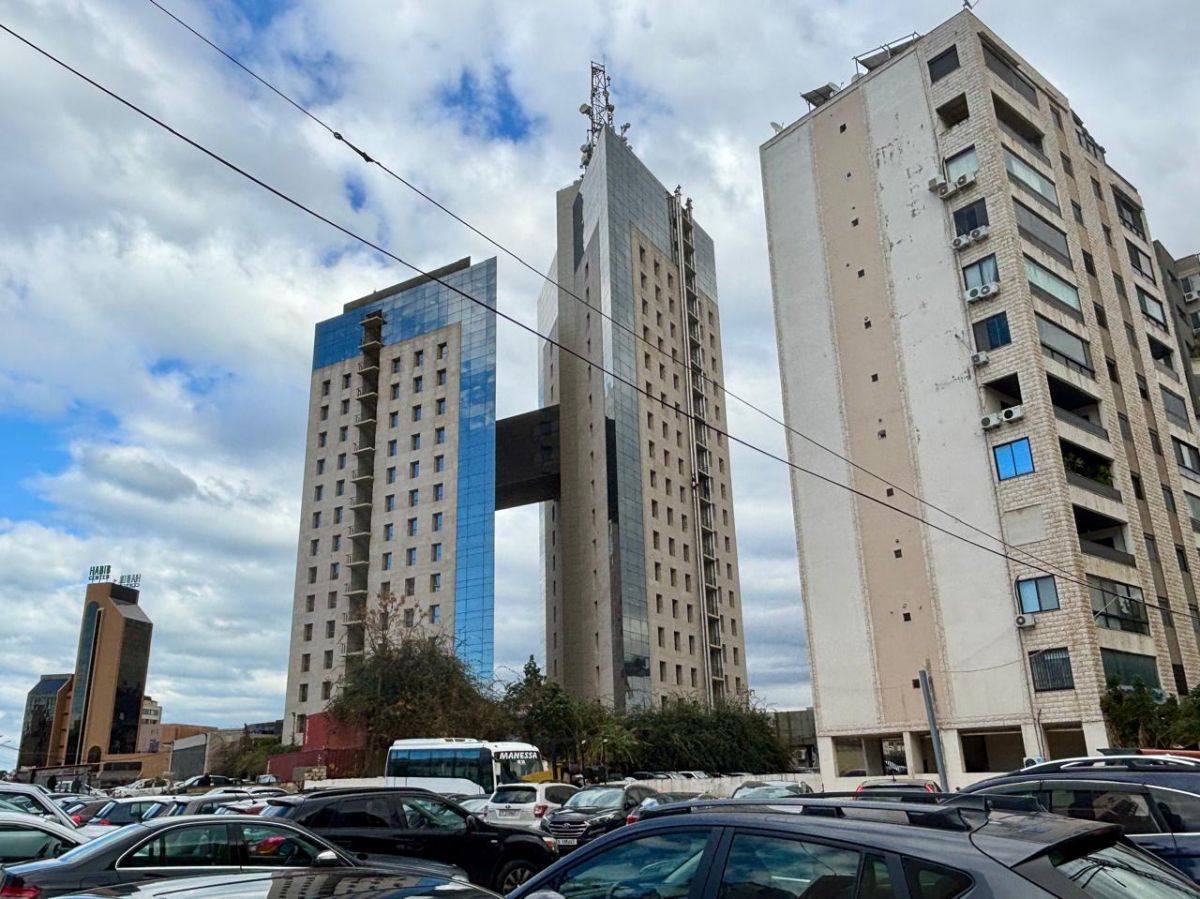
An office building in Dikwaneh in the northeastern suburbs of Beirut on Jan. 14, 2026. (Credit: Philippe Hage Boutros/L'Orient-Le Jour)






BEIRUT — The Lebanese Purchasing Managers' Index (PMI), published by Blominvest, started the year with a score of 50.1 points, just one-tenth above the equilibrium point, after a 2025 in which it posted its best scores since its creation in 2013.
Compiled through surveys of purchasing managers from 400 local companies, it is also down 1.1 points compared to December, reflecting a slight month-on-month decline in private sector sentiment.
A PMI below 50 points indicates a contraction in activity, while a PMI above 50 points signals expansion. The higher or lower the PMI value changes from one month to another, the stronger the growth or contraction it reflects.
"This is the first time since the launch of this survey that private sector business conditions have experienced six consecutive months of expansion," notes Helmi Mrad, a Blominvest analyst, quoted in the press release announcing the index results.
"However, the slowdown between December and January probably reflects a rise in geopolitical risks, with the increased U.S. military presence in the region suggesting the possibility of a conflict with Iran," he added.
The sub-index measuring output dropped by nearly two points but remained at 50 points, while the new orders sub-index reached 50.1 points after a similar trend. The new export orders sub-index rose by two-tenths.
The sub-index measuring expectations for the next 12 months also lost ground but gained a few tenths to stabilize at 40 points, indicating a certain pessimistic wait-and-see attitude linked to "ongoing security concerns," concludes Helmi Mrad.
After more than six years of crisis, whose causes have still not been addressed and whose effects have been exacerbated by COVID-19 and the war between Israel and Hezbollah, Lebanon is struggling to get back onto the path of fragile growth. The World Bank estimated that Lebanese GDP grew by 3.5 percent in 2026 and expects inflation to record a positive rate in 2026, a first since 2019.

 7 p.m. recap: Netanyahu seeks mastermind behind Flydubai incident; Washington sanctions 2 French nationals; Ben Gvir's 'I want to kill you' threat