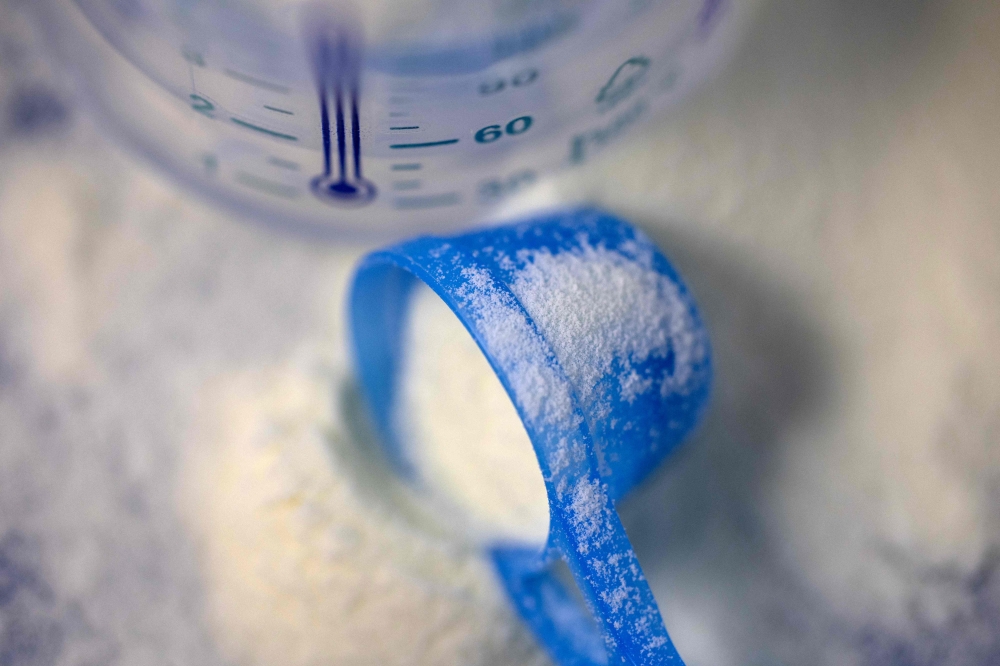
A spoonful of powdered infant milk and a baby bottle in Quimper, western France, on Janl. 29, 2026. (Credit: Fred Tanneau/AFP)






The Lebanese Ministry of Health and the Lebanese Order of Pharmacists assured L’Orient-Le Jour that no potentially at-risk batches of infant formula had been imported to Lebanon or are in circulation on the market, even as several major companies — including Nestle, Lactalis and Danone — have carried out mass recalls of their products over a risk of contamination with cereulide, a bacterial toxin produced by certain strains of Bacillus cereus found in food.
"No importer has ordered or received boxes of milk belonging to the batches recalled by the manufacturers. The ministry verified this by checking all batch numbers submitted by representatives of the brands concerned," Reda Moussaoui, advisor to the Minister of Health Rakan Nasreddine, told L’Orient-Le Jour. He noted that the ministry grants prior approval for all imports of this type of product.
The president of the Lebanese Order of Pharmacists, Abdel Rahman Markabaoui, expressed the same confidence: "While some of the brands affected by the recalls are indeed sold in Lebanon, none of the batches recalled by the manufacturers were imported to Lebanon and there is no risk that contaminated products have been put on sale in Lebanon," he said, echoing comments he had made earlier in the day on the radio.
The three companies that have issued recalls — Nestle, Lactalis, and Danone — have not included Lebanon in the list of countries where at-risk batches have been shipped so far. The most recent wave of recalls was initiated as a precaution, following tightened European regulations adopted in recent weeks.
Moussaoui added that there is no risk with infant formula manufactured under license in Lebanon for foreign brands, as the manufacturer based in North Lebanon strictly adheres to international health standards. A portion of the Lebanese market is supplied directly by this factory.
The advisor to the minister also believes the risk that boxes from recalled batches could reach the market through smuggled goods is nil, as the country is not experiencing a shortage.
New recalls of infant formula were announced Monday in France, where the allowable limit for the cereulide toxin — which triggered previous recalls — has now been made stricter.
The European health agency has also just tightened its recommendations. Scientists from EFSA, the European Food Safety Authority, recommended Monday halving the allowable threshold for this toxin in infant formula, which has been behind recalls of formula boxes in more than 60 countries.
"EFSA scientists have proposed a reference limit of 0.014 µg/kg (micrograms per kilogram) of body weight for cereulide in infants," the agency stated in its decision.
France had anticipated this measure, and as early as Friday evening, the Agriculture Ministry announced the threshold would be lowered to "0.014 µg of cereulide per kilogram of body weight, a more stringent safety level compared to the previously applied threshold (0.03 µg per kilogram of body weight)."
As a direct result, two other brands announced new recalls of first-stage formula Monday morning: two batches for the Popote brand and three for Vitagermine (Babybio). Both brands stated that their other products were not affected.
Ongoing investigations
"More recalls can be expected" with the new threshold, the Directorate General for Food (DGAL), which oversees withdrawals, said Monday. The association Foodwatch, however, asserts that "this scandal is not about detection thresholds, as the multinationals want us to believe in order to evade responsibility. Cereulide has no place in infant formula."
The association added, "There is no European standard for the presence, for example, of mouse droppings in infant formula. Still, it is prohibited, and companies must ensure their products are free of such contamination," in a statement.
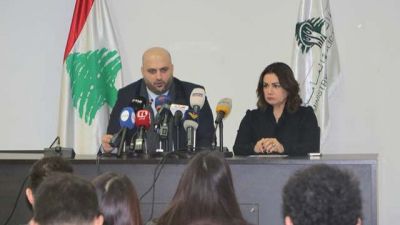
French authorities responded Monday to associations accusing them of acting too little and too late during the infant formula recall crisis. The DGAL told journalists they had not asked for a general recall and had favored "targeted withdrawals" to avoid possible shortages.
Two investigations are underway in France following the suspicious deaths of two infants (in Bordeaux and Angers) who had consumed potentially contaminated infant formula.
Five other infants have so far been hospitalized in France after consuming formulas subject to the recalls, authorities said Monday, noting that no direct link had been established at this stage and that the babies had "all been discharged today."