


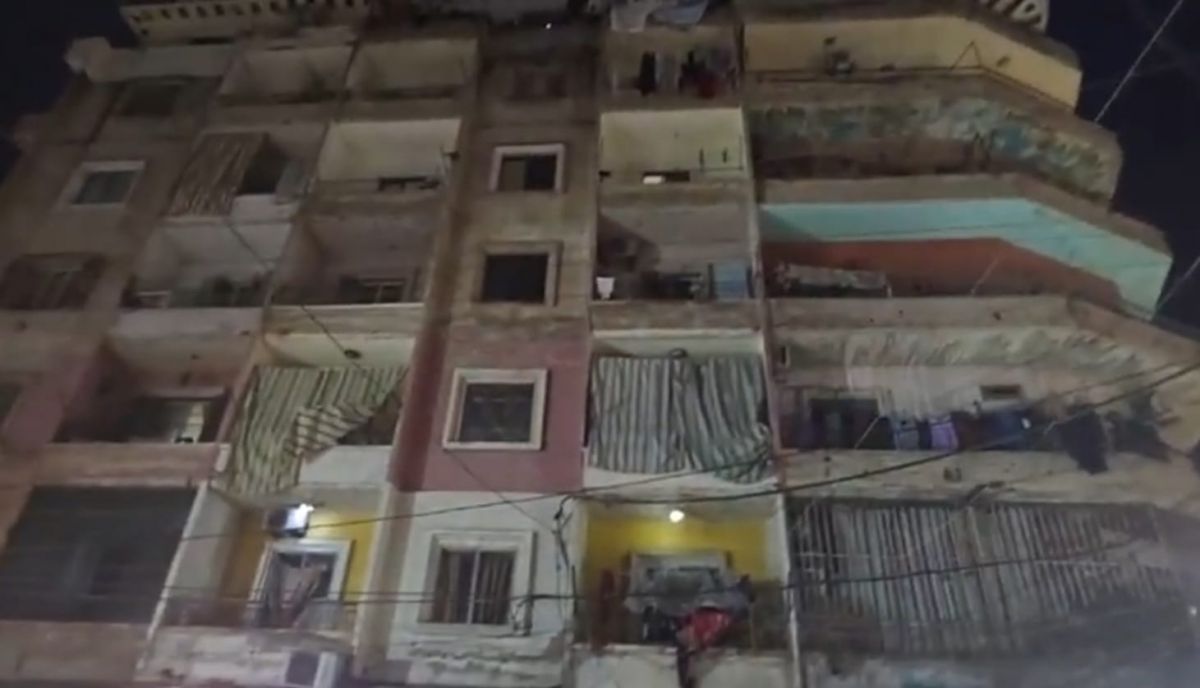
The building at risk of collapse in the Qobbeh neighborhood. (Credit: Michel Hallak)






Residents of a building in the Qobbeh neighborhood of Tripoli were forced to evacuate on Thursday without being offered any relocation solutions, our correspondent in the North reports.
The building has cracks in its foundations and is at risk of collapsing, putting dozens of neighboring apartments in danger.
The residents are demanding thorough inspections by the authorities, the municipality of Tripoli's engineering commissions, and the Lebanese government, as well as immediate intervention to ensure their safety.
They are also calling for the establishment of temporary housing until rehabilitation work is completed.
Meanwhile, the acting secretary general of the North Lebanon governorate, Iman Rafai, chaired a meeting of the committee monitoring cracked buildings in Tripoli, in the presence of the secretary general of the Higher Relief Committee, General Bassam Nabulsi, and the mayor, Abdel Hamid Karimeh, among others.
The meeting focused on completing the study of the plan for cracked buildings, updating the data, prioritizing buildings by level of danger, and analyzing residents' social conditions.
It also examined the provision of land by the municipalities of Tripoli and the port, as well as by the Union of Municipalities of al-Fayhaa, for the construction of prefabricated houses in case of evacuation.
At the end of the meeting, it was decided to activate an emergency plan at the Tripoli municipality, including the creation of a 24/7 operations room to handle complaints about cracked buildings.
The database of the 103 identified cracked buildings will be updated, and the buildings will be classified by degree of danger.
In addition, designated plots in various municipalities will be used to set up prefabricated houses provided by the Higher Relief Committee to ensure temporary housing in case of a rapid evacuation.
Last weekend, two residents of Qobbeh (members of the same family) were killed in the collapse of a two-building block where they lived. The buildings had been evacuated a few hours earlier.
Several warnings had already been raised about the risk of collapse in the city, Lebanon's poorest, which faces severely deteriorated infrastructure and a lack of funding.
According to the latest municipal census from 2024, about 105 still-inhabited buildings face an immediate risk of collapse and require evacuation. Andira Zouhairi, head of the Lebanese Buildings League, estimates that nearly 4,000 buildings in Tripoli are at risk.

 7 p.m. recap: 1 person killed near border with Lebanon; 200 kilos of explosives carried by mules; Riyadh shuts its airspace