
Vénus-Khoury Ghata in 2021. Archive photo Catherine Helie / L'Orient-Le Jour






The Lebanese-French poet and novelist Venus Khoury-Ghata, a leading figure in Francophone literature, died Wednesday in Paris, where she had lived for more than fifty years. She leaves behind a powerful body of work, marked by exile, memory, and the condition of women.
Born in 1937 into a Maronite family in the Lebanese mountains, she grew up between two worlds: a francophone military father, an interpreter for the French High Commissariat during the Mandate, and a mother rooted in the land. She retained an indelible mark from her childhood in Bécharré, the village of Khalil Gibran, describing the place as "north of all norths," an intimate territory of happiness and light.
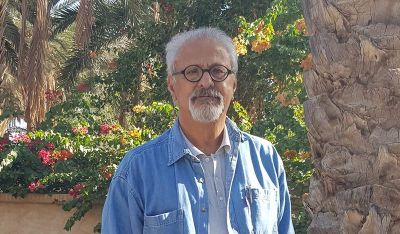
The eldest sister of writer and journalist May Menassa, Venus turned to literature early. After studying at the École supérieure de lettres in Beirut, she published her first poetry collections in the 1960s, before releasing her first novel, "Les inadaptés" (Éditions du Rocher), in 1971.
Her writing, dense and full of imagery, already carried themes that would never leave her: uprootedness, solitude, and the voice of women — central figures in her novels, often confronted with the violence of a male-dominated world.
Settling in Paris in 1972 to flee the Lebanese war, she remained there, pursuing a prolific career at the crossroads of cultures. The wife of doctor and researcher Jean Ghata, she built a unique literary path between East and West, where the French language became both a place of refuge and a field of poetic struggle.

Having received the Grand Prix de poésie from the Académie française in 2009 and the Goncourt prize for poetry in 2011 for her entire work, Venus established herself as one of the major voices of contemporary poetry.
President of the jury for the Grand Prix national de la poésie of the Ministry of Culture in 2017 and a member of the Assembly of Francophone Women Writers from 2018, she also worked to promote women's voices in literature.
With around forty books translated into many languages, her work remains that of a writer of intimacy and vertigo, where wounds become song and exile becomes a homeland of words.
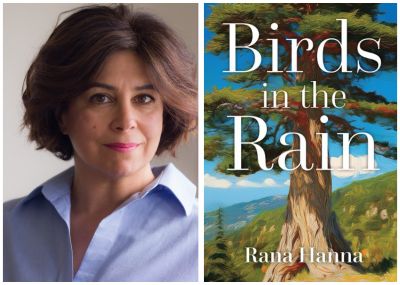
Among her major works: "Le moine", "l’Ottoman et la femme du grand argentier" (Actes Sud), "Les ombres et leurs cris" (Éditions Belfond, Apollinaire Prize) and "La fiancée était à dos d’âne" (Mercure de France, Renaudot Prize).
In a message on X, Lebanese Minister of Culture Ghassan Salameh paid tribute to the writer. "Farewell Venus Khoury-Ghata! Your pen will no longer give birth to those words filled with emotion. You will no longer bring poetry lovers together in your ground-floor apartment overlooking the park. You will no longer worry about a homeland you never stopped loving. You will remain in your collections and in our memories," he wrote.