






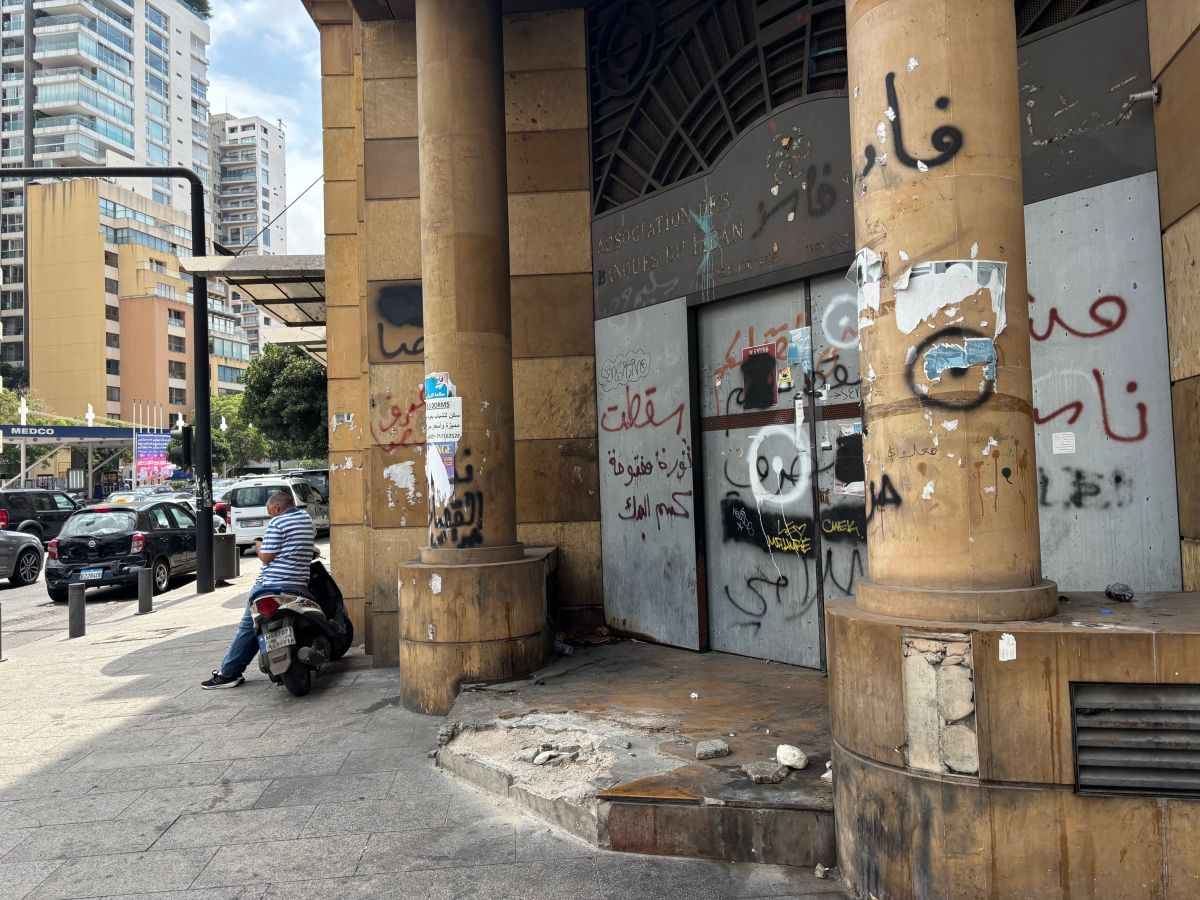
The entrance of the ABL, which was damaged during the protests that took place in the wake of the Oct. 17, 2019 uprising, on Aug. 7, 2025. (Credit: Philippe Hage Boutros/L’Orient-Le Jour)






The Association of Banks in Lebanon (ABL) has called on banks to attend a meeting next week to consult and take measures after the Nawaf Salam government adopted a draft law to organize financial loss distribution, recover some deposits frozen for six years, and address the 2019 crisis.
Radically opposed to this project, officially titled "Restoration of Financial Order and Return of Deposits" but also known as the law on the "financial gap," the ABL announced in a brief statement published Monday evening, following a board meeting dedicated to reviewing decree No. 2224 of Dec. 29, 2025, which includes the draft law.
The ABL held a meeting before the text's adoption but made no concrete decisions, while some members privately denied rumors that the association planned to strike if the law was adopted.
In the past, ABL has obstructed efforts to clean up public finances that did not require the state to bear the majority, if not the entirety, of the losses, as it considers the crisis systemic.
Its approach is contested by the International Monetary Fund, which Lebanon approached as early as 2020 to subscribe to a financial assistance program, and which, in particular, considers that any restructuring effort in the sector must start with shareholders assuming responsibility, before determining the share that depositors and the state must bear.
The ABL's position is shared by a majority of its member banks, though there is some nuance among them.
In the past, some institutions have conceded — without it being possible to judge their sincerity — that it would be difficult to fill the country's colossal losses (which hover around $70 billion, according to the most frequent estimates) without also making the banks contribute, though they argue that this participation should not put them at risk.
Other voices, including those in the private sector, have also criticized the bill.
'Banks exploit depositors' suffering'
On Monday, Salam said he was "open to any proposal that could improve this bill," while also stressing that he "cannot accept criticism that does not offer alternatives, as this contributes to wasting depositors' funds, paralyzing the banking sector, and weakening the economy."
The bill, adopted last Friday and since sent to Parliament, is also opposed by some of the depositors' associations established since the start of the crisis, most of which are linked to specific political factions.
The Depositors' Union, born in the wake of the Oct. 17, 2019, protest movement, is among the few that think the bill should be amended before being passed, while at the same time welcoming the progress made by the Salam government in adopting a text that had never before passed the Cabinet due to pressure from stakeholders opposed to its adoption.
A delegation from this association visited the Grand Serail on Tuesday to discuss the issue with the prime minister. "We do not claim to represent all opinions of all depositors in Lebanon," said Raed Bou Hamdan, one of the organization's co-founders, after the meeting. He also denounced "the media campaign led by the ABL lobby against the proposed bill, falsely claiming that depositors and banks reject the text."
"As an association, we represent the interests of depositors and have presented our observations and objections. It is true that we have reservations, but they are based on a different approach than that defended by the ABL and the lobby exerting pressure in its favor," Bou Hamdan continued. "
The banks exploit the suffering of depositors to torpedo the plan," he lamented. "All they want at this stage is the absence of a plan, as they seek to evade their responsibilities and losses, which they are trying to shift to depositors and the state, i.e., to public finances and the citizens in the coming phase."

