


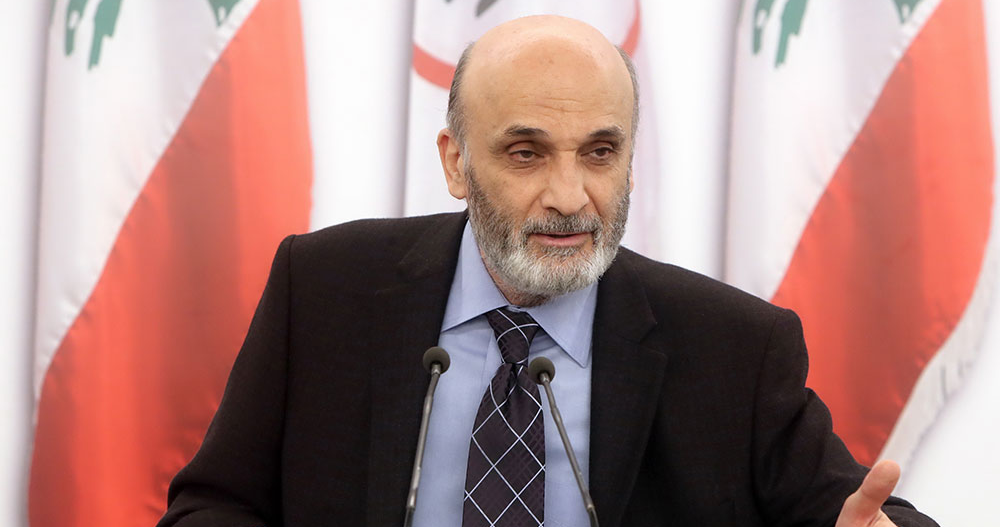
Head of the Lebanese Forces Samir Geagea. (Credit: NNA)






Lebanese Forces leader Samir Geagea issued a statement addressed to Hezbollah chief Naim Qassem on Sunday, rejecting claims that the cease-fire agreement limits disarmament to south of the Litani River. Geagea asserted that both the agreement and U.N. Security Council Resolution 1701 clearly mandate the removal of all illegal weapons across the entirety of Lebanon.
“Sheikh Naim, this is not the first time you have claimed that the ceasefire agreement is confined to disarmament south of the Litani River only, while leaving the matter of weapons north of the Litani to the Lebanese. In the interest of intellectual honesty, this claim completely contradicts what is stipulated in the cease-fire agreement,” Geagea said.
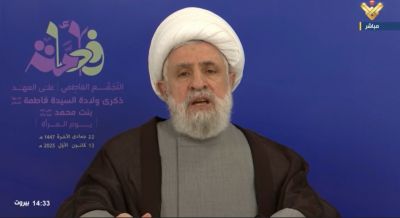
Earlier in December, Qassem reiterated that Hezbollah refuses to hand over its weapons and stated that it is “ready for the greatest sacrifices,” while expressing openness to internal dialogue about a “defense strategy.” He also criticized the government's decision to initiate civilian-led negotiations with Israel.
Geagea emphasized that the agreement’s preamble reaffirmed the “full implementation of U.N. Security Council Resolution 1701,” which calls for the disarmament of all armed groups in Lebanon and helped end the 2006 war between Israel and Hezbollah.
According to Geagea, this would leave weapons only in the hands of the official Lebanese security and military forces. Resolution 1701 also stressed the “extension of the control of the Government of Lebanon over all Lebanese territory,” in line with Resolution 1559, Resolution 1680, and the Taif Agreement, all of which call for the dissolution of armed organizations.
He reminded Qassem that Resolution 1701 mandates the monitoring and enforcement of the prohibition on the entry of any unauthorized weapons into or through Lebanon, as well as the prevention of their local production." He added that the text explicitly calls for the dismantling — starting from the area south of the Litani River — of all unauthorized facilities used to manufacture weapons, while preventing their reestablishment.
Geagea also stated that a “majority” of Lebanese support the “dissolution of all armed organizations, foremost among them Hezbollah and the armed Palestinian organizations, across all Lebanese territory.”
Despite the cease-fire agreement reached on Nov. 27, 2024, Israel has continued its attacks on Lebanon on a near-daily basis, with intensified strikes in recent months, and it continues to occupy at least six positions in southern Lebanon. Hezbollah has repeatedly said it is adhering to the cease-fire but refuses to surrender its weapons as long as Israeli attacks persist and the Lebanese Army is not sufficiently equipped to defend the country.
 Israeli army carries out demolition at Jabal Amel School in Houla as strikes continue