






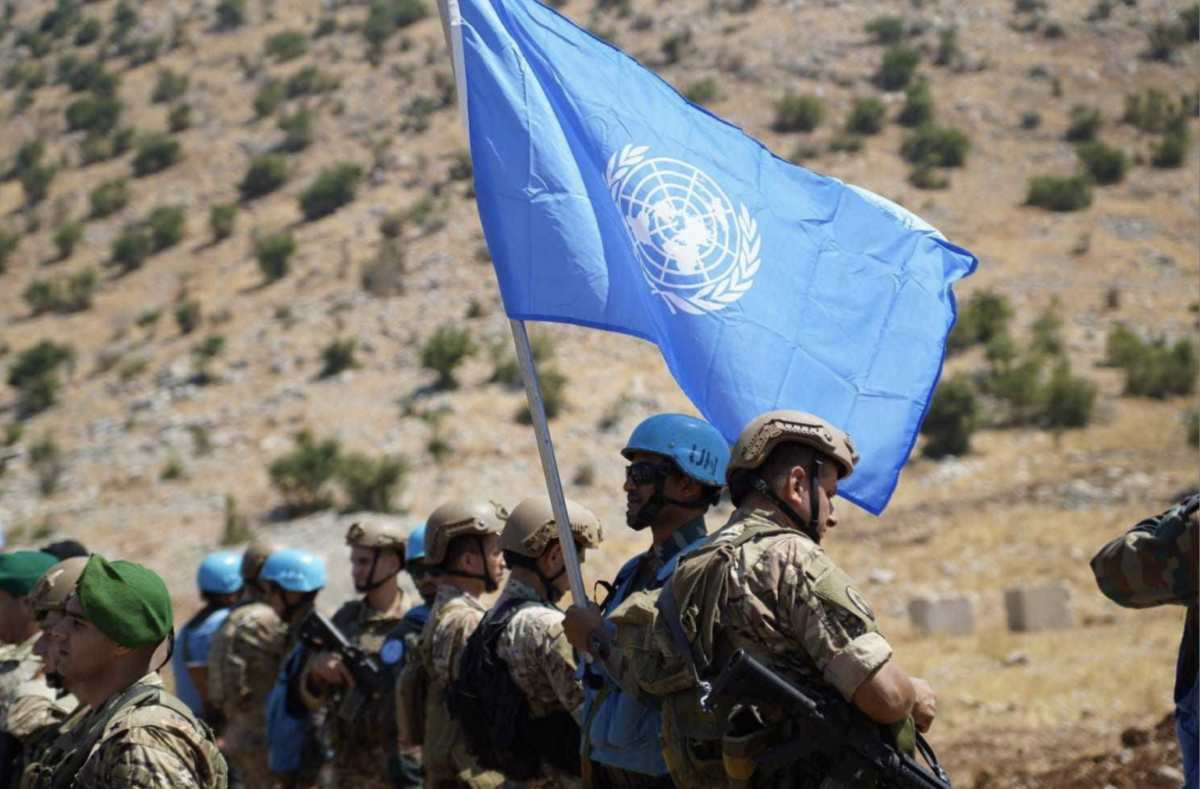
Lebanese soldiers and UNIFIL peacekeepers in Kfar Shuba, southern Lebanon, August 26, 2024. (Credit: Mohammad Yassin/L'Orient-Le Jour)






BEIRUT — As tensions remain between the inhabitants of southern Lebanon, the peacekeepers' area of operation and the U.N. force, and as pressure intensifies ahead of the renewal of its mandate, Lebanese officials have united in expressing their support for the U.N. Interim Force in Lebanon (UNIFIL). They warned against any decision against it. On Tuesday, a violent incident took place in Sour, southern Lebanon, between peacekeepers and “individuals in civilian clothes.”
Parliament Speaker Nabih Berri said Wednesday that Lebanon, particularly its South, is keen on preserving the role of the UNIFIL despite growing tensions between inhabitants and peacekeepers in the areas where the force is mandated to operate, and as reports circulate of possible pushback ahead of the UNIFIL mandate's renewal.
“Lebanon and the sons of the South more than want, more than anyone else, for UNIFIL to stay in their towns and to preserve the mutual relation between the two sides, which has persisted since its units came in 1978," Berri said in an interview with An-Nahar.
'Hezbollah does not hinder their mission'
Berri's comments come in the wake of another clash between "individuals in civilian clothes" in southern Lebanon and UNIFIL troops, this time in Sour district. The latest surge in incidents, largely characterized by criticisms from residents that UNIFIL was operating in or around their villages without Lebanese Army coordination, has prompted the international mission to call on Lebanese authorities to "take the necessary measures" so its members can carry out their mission "without obstacle or threat."
Residents had attempted to expel the force from private land, throwing stones at U.N. vehicles. UNIFIL said it fired warning shots in the air and used tear gas on the village's protesting residents.
After this incident, the Lebanese Army deployed in the area to pursue the aggressors.
When asked to comment on the events, Berri responded, saying that he considers these incidents to be the result of UNIFIL patrols "entering private property without being accompanied by the Lebanese Army."
"Hezbollah [an ally of Berri] does not hinder their mission," Berri asserted, "but we do not accept any modification of the powers devolved to them."
He also assured that no Western or U.N. diplomat had mentioned to him the possibility of the international force withdrawing from the South, dismissing the recent reports hinting that such a movement was underway between Israel and the U.S.
Hezbollah MP Ali Fayad expressed his wish to establish "a positive relationship between the citizens of the South and the U.N. force," stressing the importance of maintaining UNIFIL's presence in the region, within the framework of U.N. Resolution 1701, its founding document, "in coordination with the Lebanese Army, and in its defined role of preventing Israeli violations and aggressions, and supporting the Lebanese state in affirming its sovereignty."
Fayad criticized the peacekeepers for entering villages and private properties "without coordination or the presence of the Lebanese Army," at a time when residents of the South are not seeing any concrete actions taken on the part of UNIFIL to address Israel's ongoing occupation of Lebanese territory, nor toward combating continued infiltrations by Israeli soldiers, targeted assassinations and "hostile acts in the international forces' operational area," Fayad emphasized.
The Vice-Chairman of the Higher Shiite Islamic Council, sheikh Ali al-Khatib, called on “[his] fellow citizens in the South to adopt a positive attitude towards the U.N. forces, in accordance with the moral values stemming from our national and Islamic heritage.”
He considered that “the incidents that occur between these forces and citizens serve neither the national cause, nor the liberation of the territory, nor the halting of Israeli aggression, but are exploited by this enemy [Israel] as well as by certain internal actors to harm the resistance and our noble objectives.”
Maintain UNIFIL to avoid 'plunging into the unknown'
Lebanese Forces leader Samir Geagea expressed his astonishment that the Lebanese authorities haven't yet taken a clear position on what was happening with the UNIFIL forces.
"If UNIFIL exceeds the limits of its prerogatives, the Lebanese authorities must inform it immediately. But if, as is clear from Resolution 1701 and successive renewals of its mandate, UNIFIL does not exceed its prerogatives, then it is up to the competent authorities to intervene from the outset, not only to put an end to the clashes pitting certain young people against the Blue Helmets, but also to arrest the aggressors and bring them to justice."
“The Lebanese authorities must arrest anyone who attacks UNIFIL and act in such a way as to demonstrate the existence of a genuine state in Lebanon,” concluded Geagea.
"It is important to adapt to the cycles of time, despite their harshness, while awaiting better political conditions," Druze leader Walid Joumblatt wrote in a post on X. "In this context, maintaining the international forces in southern Lebanon is more than necessary to avoid entering the unknown in a time of chaos and wars that prevail in the world."
“In the face of repeated attacks on U.N. forces, alongside revelations of new collaborators with the Israeli enemy,” former Prime Minister Najib Mikati said it was incumbent on Hezbollah to “redouble its efforts to clean up its environment, so as not to be among those involved in the project to overthrow UNIFIL or undermine its role.”
"The presence of UNIFIL in the South is an extension of international control over Lebanon. The greatest danger would be for some to consider the ousting of UNIFIL as a victory, as this would plunge Lebanon into a phase with unpredictable consequences both in terms of international legitimacy and on the ground," he added.
Since the ostensible cease-fire between Israel and Hezbollah came into effect on Nov. 27 last year, Israel has killed nearly 200 people and about fifty incidents have pitted southern inhabitants, mostly Hezbollah supporters, against peacekeepers. The renewal of UNIFIL's mandate is scheduled for late August. The yearly renewal by the U.N. Security Council cyclically causes upheaval within Lebanese politics.
In 2024, the debate revolved around adding a mention in the mandate's text requiring peacekeepers to circulate only with a Lebanese Army escort, but Article 12 continues to guarantee their freedom of movement in their deployment area. In early May, the Lebanese Army told L'Orient Today that, due to a lack of resources, it more frequently allows peacekeepers to patrol alone.
