





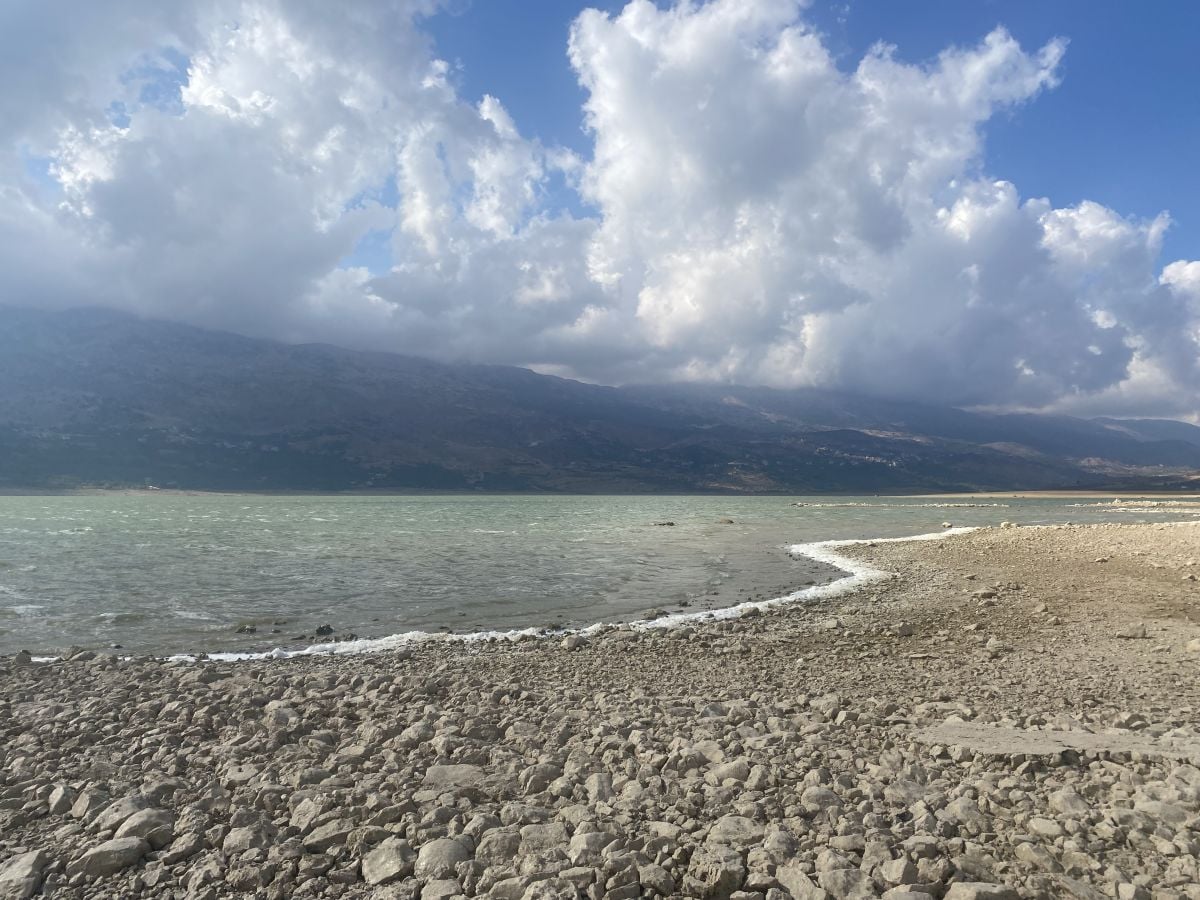
Lake Qaraoun in the Bekaa. Illustrative photo S.B.






Jean Gebran, general director of the Beirut and Mount Lebanon Water Establishment announced on Monday in an interview with MTV that, “Rationing will be very severe this year due to a precipitation rate that is 70 percent lower than in previous years."
"The most serious issue is the absence of snow on the peaks,” he added.
The natural water reservoirs in Lebanon are mostly underground, so their replenishment relies heavily on snowmelt in the spring. The effects of climate change are evident, as in the entire eastern Mediterranean, with generally higher temperatures in all seasons and an increasingly prolonged dry season.
The 2024-2025 rainy season (which generally begins in September) is particularly dramatic. As of Jan. 27, according to Météo-Liban, Beirut received 259.9 millimeters of rainfall compared to 716.2 last year and a 30-year average of 493 millimeters. For Tripoli, the figure is 278.1 millimeters compared to 802 last year at the same time and an average of 494. In Zahleh, only 150.6 millimeters fell this season against 468.4 last year, with an average of 369.
Water supply for households and agricultural field irrigation will be noticeably affected earlier this year than others.