





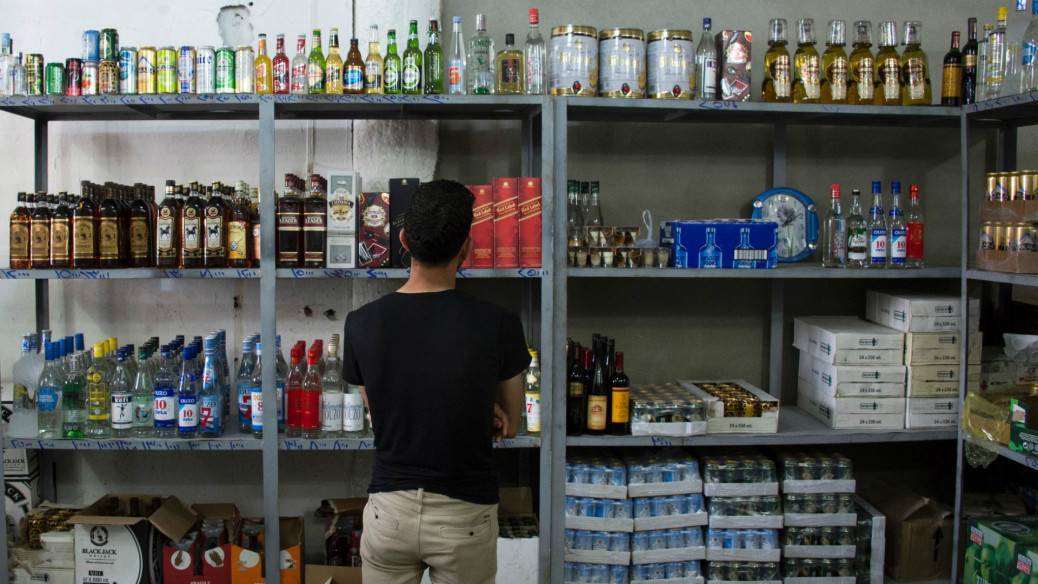
A liquor store in Mosul, northern Iraq. (Credit: AFP)






Baghdad has tightened its restrictions on alcohol, further limiting its availability. Hotels and "social clubs," previously among the last places where alcohol consumption was still legal, are now prohibited from selling it. On Monday, the Iraqi parliament approved a law banning alcohol sales in these establishments, moving the country closer to total prohibition. Violators face fines ranging from $7,700 to $19,000.
Background on the ban
In March 2023, a law banning the sale, import, and production of alcohol officially went into effect. Although the legislation was passed in 2016, it remained unenforced for years due to protections for individual rights and freedoms, particularly for religious minorities, who constitute about 3 percent of Iraq’s population.
The sudden publication of the law in the official gazette last year sparked a backlash from liberal segments of Iraqi society and non-Muslim communities, including Christians and Yazidis. Some parliamentary representatives from these groups challenged the legislation but were unsuccessful.
Protests by liquor store owners soon followed, with demonstrators declaring, “Baghdad will not become Kandahar,” a reference to Afghanistan's strict prohibitions. While the law came into force, establishments licensed to sell alcohol — such as stores owned by religious minorities, hotels, and clubs — initially remained open, as they did not receive immediate orders to shut down.
Underground markets and rising costs
Over time, acquiring alcohol in Iraq has become increasingly difficult. Buyers now rely on clandestine social media groups to arrange purchases. Compounding the problem, Baghdad imposed a 200 percent tax increase on alcohol imports for four years, making it prohibitively expensive and accessible only to the wealthiest Iraqis.
On Monday, the century-old Al-Alwiyah Club was ordered by the Prime Minister’s Office to stop serving alcohol, while the management of the Iraqi Hunting Club announced it would follow suit after receiving direct instructions from authorities, *The Washington Post* reported. Currently, only a few high-end establishments with steep prices still appear to serve alcohol in Baghdad.
Opposition and broader implications
The Christian parliamentary bloc Al-Warka has opposed the ban, warning it could lead to an increase in drug use. “The issue of alcoholic beverages, under the guise of religion, is a commercial matter,” said MP Joseph Sliwa, as reported by Shafaq News. “The goal is to generate profit and pave the way for the spread of drugs controlled by certain armed factions operating outside state authority.”
Sliwa also noted that the ban could have significant consequences for Iraqi society and its economy, pointing out that the alcohol sector generates millions of dollars in annual revenue for the state.
With parliamentary elections scheduled for 2025, another Christian politician quoted by *The Washington Post* argued that the law, pushed by hardliners, risks alienating non-Muslims, tourists, and diplomats while threatening thousands of jobs for religious minorities. Earlier this year, another controversial law establishing a Shiite religious holiday as a national day off drew criticism from other communities.
For now, the Kurdistan region remains unaffected by the alcohol ban. The 2023 law has not been enforced in the autonomous region, where Erbil applies its own customs regulations.

 7 p.m. recap: Iran warns Egypt, Israeli soldiers vote in south Lebanon, Haret Hreik responds to Kataeb