



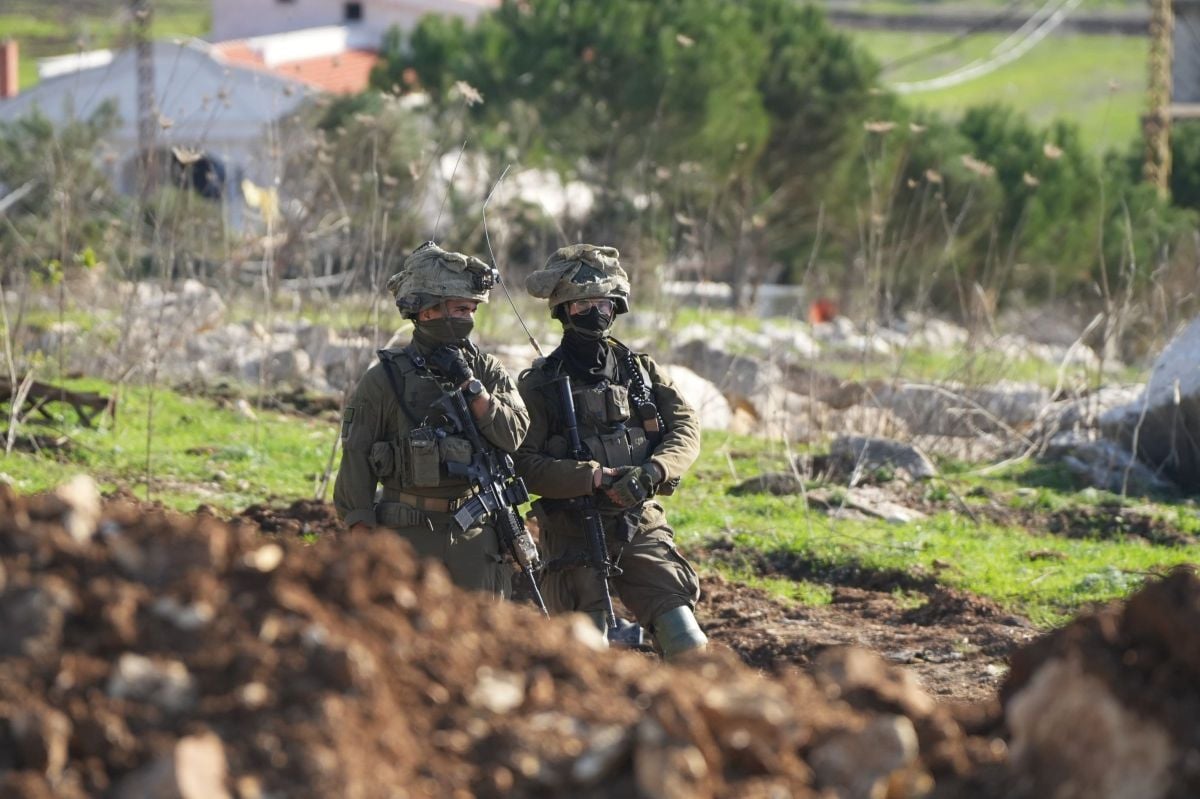
Israeli soldiers in southern Lebanon on Jan. 26, 2025. (Credit: Mohammad Yassine/L'Orient-Le Jour)






The latest escalation began Wednesday after two Israeli soldiers were killed in an explosion in Majdal Zoun, in the Sour district, which the Israeli military said was caused by an explosive device.
Accusing Hezbollah of a "serious violation" of the cease-fire, Israel launched strikes across several areas of south Lebanon and ordered residents of Mansouri to evacuate for the first time since mid-June.
After hours of airstrikes and demolition operations, the Lebanese Army informed Mansouri's municipality that it would return to the village to prepare for residents' return, according to L'Orient Today's correspondent. However, the deployment was later halted. Haidar Madihli, head of the municipal council, said the army was told by its command and the cease-fire monitoring committee, known as the "Mechanism," that Mansouri had been designated a "restricted military zone," forcing troops to withdraw.
The Israeli military announced Thursday that the two soldiers killed in the Majdal Zoun incident — its first fatalities in more than a month — were Major Harel Birenstock and Master Sgt. Tamir Vaknin. Four other reservists were seriously wounded. The incident came as U.S.-mediated talks between Lebanon and Israel continued in Rome.
Israeli media first reported the explosion on Wednesday before the army accused Hezbollah of violating the cease-fire. Through its Arabic-language spokesperson Ella Waweya, the military later announced strikes across south Lebanon and issued an evacuation order for Mansouri. On Thursday, it said the strikes targeted Hezbollah weapons depots, a command center and other infrastructure. In a separate statement, the military said its demolition operations in areas it occupies were aimed at destroying what it described as "thousands of Hezbollah infrastructures."
Hezbollah declines to confirm responsibility
Hezbollah spokesperson Youssef Zein told L'Orient Today he could not confirm that the group was behind the Majdal Zoun explosion, suggesting it could instead have resulted from an Israeli mistake.
"We have no sources confirming that the explosion originated from the resistance," he said. "It could also have been an Israeli error, since enemy forces are detonating large quantities of explosives every day to destroy homes and buildings in the South, or it could serve as a pretext to expand the current aggression."
The two soldiers were the first Israeli military fatalities in south Lebanon since June 28, according to the Israeli army. Israeli broadcaster Kan, Channel 12 and Maariv reported that the incident prompted an investigation into an operation involving soldiers from the 28th Battalion of the 55th Reserve Paratroopers Brigade in Majdal Zoun, about eight kilometers north of the Blue Line.
According to Kan, the unit was securing engineering work carried out by an excavator in an area under Israeli control for about two months. Israeli media reported that the soldiers later entered a booby-trapped building, with the investigation focusing on whether standard inspection and clearance procedures had been followed beforehand.
Explosions, shelling and demolitions across south Lebanon
On Thursday, two powerful explosions shook Mansouri. It was unclear whether they were caused by Israeli airstrikes or demolition operations. A resident said the blasts "made the ground shake as if it were an earthquake," while thick smoke rose over the area. Israeli artillery also shelled the village.
Israeli forces also demolished buildings in Haddatha after firing machine guns at the village and shelled the area between Houla and Markaba. An Israeli drone dropped a stun grenade over Yater, while another targeted a motorcycle in Mayfadoun without hitting it.
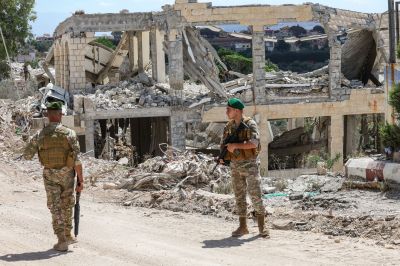
Israeli troops carried out another demolition operation in the occupied village of Zawtar Sharqieh, near Zawtar Gharbieh, one of the first "pilot zones" established last week. Military vehicles and soldiers were also seen moving from Houla toward Wadi Slouki, near one of the pilot zones in the central Bint Jbeil district, accompanied by a truck believed to be carrying explosives.
UNIFIL records 113 Israeli projectiles
After a day of intense fighting on Wednesday, south Lebanon experienced one of its heaviest periods of Israeli military activity in recent weeks overnight into Thursday, particularly in western Sour district.
Mansouri and Majdal Zoun came under sustained artillery fire, airstrikes and demolition operations that continued into the morning. In Burj al-Shamali, drone strikes on a house wounded several people, one critically, prompting some residents to flee. Shelling continued at dawn as the Lebanese Army and emergency crews inspected damaged sites.
UNIFIL said it recorded 113 projectiles fired by the Israeli army on Wednesday — the highest daily number since June 21. While noting that violence remained significantly below previous months' levels, the U.N. force said the situation remained "fragile" and that it continued monitoring developments and engaging with both sides to reduce tensions.
Also on Wednesday, about 15 Israeli female settlers crossed into Lebanese territory near Ghajar before being escorted back by Israeli troops, the Israeli military confirmed Thursday.
The renewed escalation comes as Lebanon and Israel hold U.S.-mediated talks in Rome on expanding the implementation of the "pilot zones" established under the framework agreement signed on June 26.
Since the war resumed on March 2, at least 4,333 people have been killed and 12,250 wounded by Israeli fire in Lebanon, according to the latest health ministry figures.
On Thursday, Prime Minister Nawaf Salam chaired a meeting at the Grand Serail on the return of displaced residents to south Lebanon. Officials reviewed progress on field assessments and the construction of a temporary bridge in Qaaqaaiyet al-Jisr. According to the U.N., around 360,000 displaced people have yet to return home, while more than 800,000 have already returned to southern Lebanon, the Bekaa and Beirut's southern suburbs.